MESPA Home
Members Only
About MESPA
Best Practices
Business Partners
Calendar
Careers
Colleague to Colleague
Contact Us
Division News
Honors
Join MESPA
Legal Services
Legislative Advocacy
MN Bullying Prevention Initiative & Bookstore
PreK-3 Alignment
Press Room
Professional Development
Resources for Principal Leadership
Salary and Benefits Survey
Twenty-Five Year Club
Survey: Voluntary All Day Kindergarten in Minnesota
Survey: MESPA Network
Sitemap
Professional Learning Community: Little 10 Rural Administrative PLC
Pam_Kirsch_Best_Practice_4
Pam Kirsch, principal

Pam Kirsch, principal
Jefferson Elementary, New Ulm

Little 10:
Rural Administrative
Professional Learning Community

In rural Minnesota small school districts have only one or two principals, at most.  The demands of the job and the distance between districts leave administrators very much alone. Often times the only opportunities for networking and collaborating with other principals are division meetings and MESPA Institute.
 
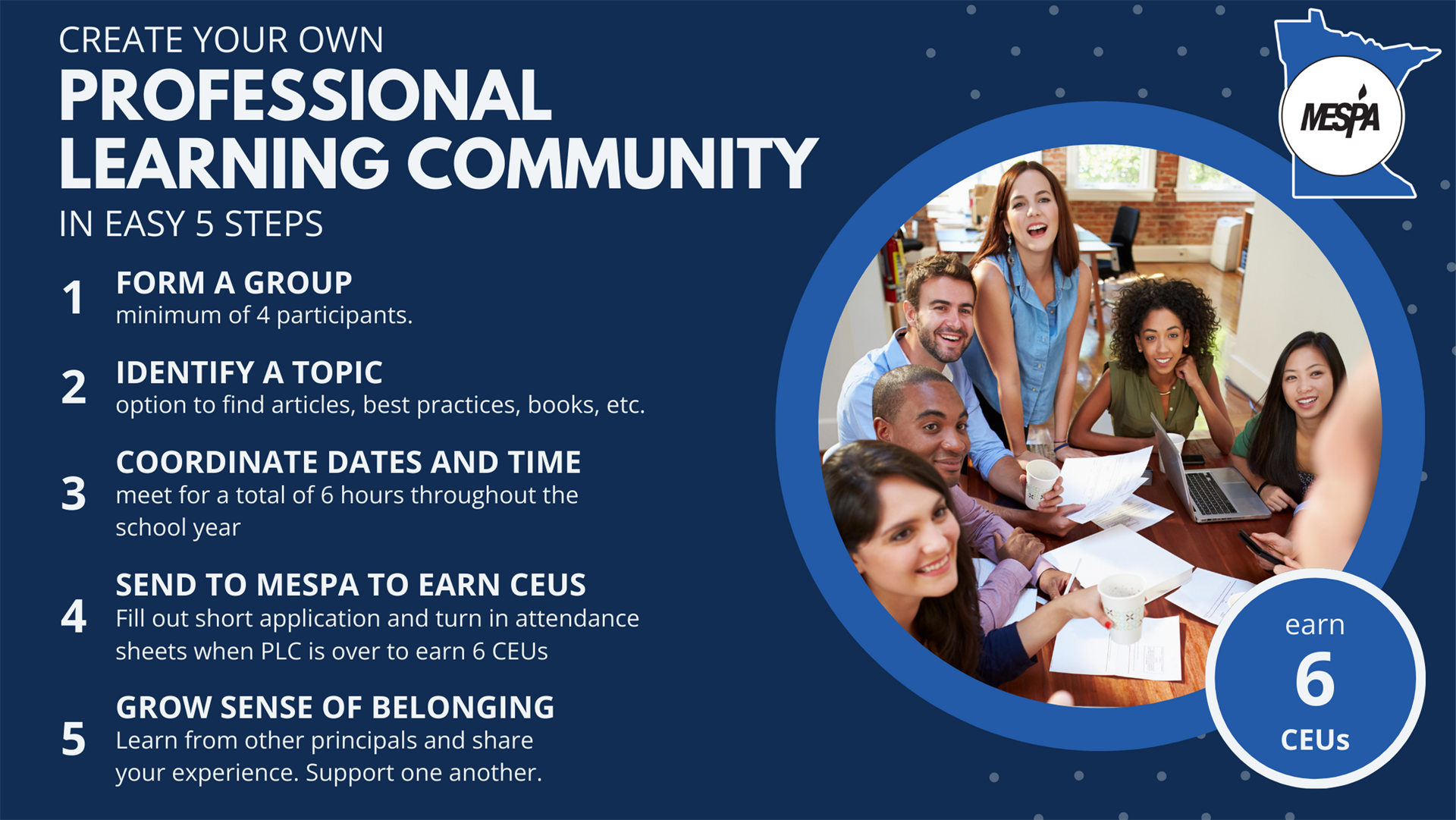
However, in southwestern Minnesota a group of rural schools established an Administrative Professional Learning Community known as Little 10.
 
Supt. Harold Remme of New Ulm, fondly know as the Godfather of Little 10, believes that Little 10 originated sometime in the 1970s.  He began attending in 1981, as a principal from Tracy. Now as superintendant of New Ulm, he leads the group. 
 
Originally 10 rural school districts were invited to participate. Over the years the membership has changed. Currently there are actually 11 districts in Little 10; GSL, Fairmont, Hutchinson, Redwood Valley, St. James, Sleepy Eye, LCWM, St. Peter, River Bend Educational District, Springfield, and New Ulm.
 
Little 10 meets five times during the school year. Administrators from the participating districts meet for about 30 minutes for networking. The participants then separate into areas of specialty such as district administrators, secondary principals, and elementary principals. The New Ulm administrators serve as facilitators for the breakout groups. Each specialty group meets for about two hours discussing topics of interest. Sometimes topics are submitted prior to the meeting and other times participants bring topics with them. The specialty groups then reconvene as one large group, network, and share a meal.
 
Traditionally, district secretaries attend one of the meetings each year. Occasionally the entire group gathers for topics.  For example, usually one meeting each year is devoted to a law or legal seminar, or area politicians may be invited to attend.
 
Member school districts pay a fee based on the number of administrators that are participating. The funds are used for expenses associated with guest speakers and for meals.
 
Topics that the elementary principals have discussed include: RTI, MN Reading Corps, reading interventions, Minnesota Literacy Plan, Title I, scheduling, elementary curriculum, length of school day, length of school year, assessments, report card formats, Kindergarten registration /open house ideas, and contract issues.
 
This is a great way for rural administrators to connect, network, collaborate, and support each other.
 
Contact Pam at pkirsch@newulm.k12.mn.us

(Published in the MESPA Advocate, May 2012)